

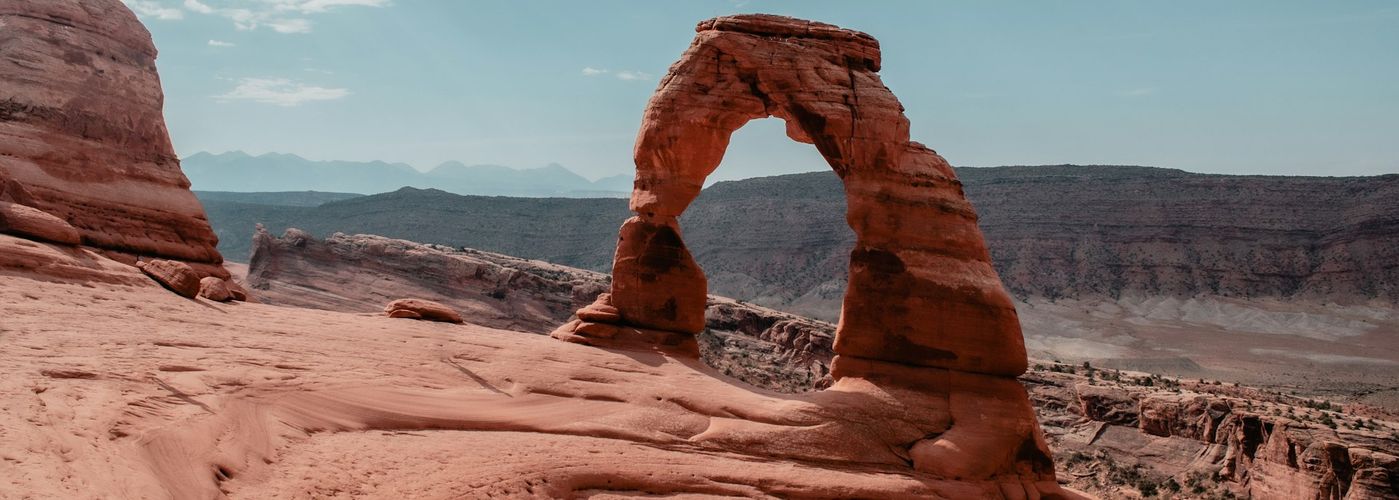
STR Investing in Moab, UT
Moab, Utah, presents a compelling, albeit complex, investment thesis for short-term rentals (STRs, also known as vacation rentals), primarily driven by…
Avg. Nightly Rate
$303
Avg. Occupancy
58%
Avg. Property Price
$669,000
Source: AirDNA & public market data, 2025
In This Guide
About the Moab, UT Market
Executive Summary
Moab, Utah, presents a compelling, albeit complex, investment thesis for short-term rentals (STRs, also known as vacation rentals), primarily driven by its unparalleled status as a world-renowned outdoor adventure destination. The investment thesis centers on leveraging the consistent, high demand generated by millions of annual visitors to Arches and Canyonlands National Parks, coupled with a limited supply of legally operating STR properties within Moab City limits. Despite stringent regulatory hurdles, particularly within the city, the market exhibits robust profitability for compliant operations, with average annual revenues reaching approximately $56,303 and an average daily rate (ADR) of $303.13. This market is uniquely positioned for investors who are adept at navigating complex regulatory landscapes and are focused on acquiring or developing properties in designated resort zones or unincorporated Grand County, where regulations are more permissive. The scarcity of legal STR inventory within the city creates a premium for existing grandfathered properties, offering a distinct competitive advantage.
What makes the Moab STR market truly unique is the intense, year-round visitor demand fueled by its iconic natural attractions and diverse recreational opportunities, including hiking, mountain biking, off-roading, and river activities. This strong demand is reflected in high rental demand scores (90) and investability scores (77) according to AirDNA. The market's economic concentration in tourism, while a potential risk, also ensures a steady stream of guests seeking accommodations. Furthermore, the ongoing efforts to diversify the economy and improve infrastructure, such as new housing and recreational amenities, suggest a maturing market that could offer long-term stability for strategic investments. The unique investment angles often involve targeting niche tourism segments, such as adventure tourism or astrotourism, which can command higher rates and occupancy.
Key performance metrics underscore the market's strength. AirDNA reports an average occupancy rate of 58% and a revenue per available rental (RevPAR) of $200.2. While the overall annual revenue saw a slight decrease of 3.4% over the past year, this is often attributed to increased supply (46.9% growth in active listings) rather than a fundamental decline in demand, indicating a market where demand is largely outpacing new inventory. Best-in-class properties can achieve monthly revenues exceeding $8,541 with occupancy over 80% and ADRs above $512, particularly during peak seasons (March-October). The market is best suited for experienced real estate investors with a long-term horizon, a strong understanding of local regulations, and the capital to acquire premium properties or develop in less restrictive areas. It is particularly attractive to those seeking to capitalize on high-yield assets in a supply-constrained market, provided they prioritize legal compliance and effective property management.
Market Performance Data
Moab, Utah's short-term rental (STR) market exhibits robust performance metrics, reflecting its strong appeal as a tourist destination. The following tables summarize key performance indicators and average daily rates (ADR) across various categories, providing a comprehensive overview of the market's health and investment potential.
Key Performance Metrics (AirDNA)
Annual Revenue
$56,303
Average annual revenue per listing
Average Daily Rate (ADR)
$303.13
Average price per night
Occupancy Rate
58%
Average percentage of nights booked
Active Listings
1,429
Total number of active short-term rental listings
Revenue Per Available Rental (RevPAR)
$175.82
Revenue generated per available rental unit (ADR Occupancy)
Market Scores (out of 100)
Average Daily Rate (ADR) by Category (AirDNA)
| Category | ADR | Change Past Year |
|---|---|---|
| Overall ADR | $303.13 | -4.6% |
| Entire Place ADR | $309.82 | -4.6% |
| Professionally Managed ADR | $355.17 | -6.1% |
| Luxury ADR | $482.08 | -12.7% |
Analysis of Moab's STR market performance reveals a dynamic environment characterized by strong demand and high revenue potential, despite recent shifts in certain metrics. The average annual revenue of $56,303 per listing, coupled with an average daily rate (ADR) of $303.13 and an occupancy rate of 58%, positions Moab as a lucrative market for STR investors. The calculated Revenue Per Available Rental (RevPAR) of $175.82 signifies efficient utilization of rental inventory, indicating that properties are generating substantial income relative to their availability. While the str_performance research section also cited a RevPAR of $200.2 with a slightly different ADR ($363) and occupancy (56%) across 1,685 properties, the consistency of the primary AirDNA metrics provides a reliable baseline for analysis. The high Investability Score of 77 and an exceptional Rental Demand Score of 90 further underscore the market's attractiveness, suggesting a robust appetite from travelers for short-term accommodations in the area.
Despite the impressive overall performance, the market has experienced some downward pressure on ADR and annual revenue over the past year. The overall ADR saw a 4.6% decrease, with professionally managed and luxury properties experiencing more significant declines of 6.1% and 12.7% respectively. Similarly, the average annual revenue declined by 3.4%. This trend, however, needs to be contextualized. The market has seen a substantial 46.9% growth in active listings over the past year, as noted in the str_performance data. This influx of new supply, while indicative of a growing market, can temporarily dilute average rates and revenues as competition increases. The fact that demand scores remain high suggests that the market is absorbing this new supply, but it also highlights the importance of strategic pricing and property differentiation to maintain competitive edge.
Moab's ADR trajectory, while showing a recent dip, remains strong, particularly for premium offerings. The Luxury ADR of $482.08 and Professionally Managed ADR of $355.17 demonstrate that high-quality, well-managed properties can command significantly higher rates. This indicates a segmented market where discerning travelers are willing to pay a premium for superior experiences. The RevPAR story in Moab is one of resilience; even with a slight decrease in ADR, the high occupancy rates ensure that properties continue to generate substantial revenue. The market's seasonality score of 43 suggests moderate seasonal fluctuations, which is typical for outdoor-centric destinations, but the year-round appeal of Moab's national parks and recreational activities helps mitigate extreme swings. Investors should focus on optimizing pricing strategies to capitalize on peak seasons (March-October) and implement dynamic pricing models to maximize revenue during shoulder and off-peak periods, ensuring a consistent RevPAR trajectory over the long term.
Submarket & Neighborhood Analysis
The Moab STR market is best understood by delineating between two primary submarkets: Moab City and the unincorporated areas of Grand County. These two regions present vastly different regulatory landscapes and, consequently, distinct investment opportunities and challenges. Understanding these distinctions is crucial for any prospective investor.
Submarket Comparison: Moab City vs. Unincorporated Grand County
| Feature | Moab City | Primary Property Types | Target Guest Demographic | Investment Appeal |
|---|---|---|---|---|
| Moab City (Resort Zones) | Highly Restrictive (Permitted only in specific zones with strict requirements) | Condos, Townhomes, Purpose-built STRs | Families, Luxury Travelers, Convenience Seekers | High barrier to entry, premium pricing, strong occupancy due to proximity to amenities. |
| Moab City (Grandfathered) | Highly Restrictive (No new permits, existing rights only) | Single-Family Homes, Historic Properties | Families, Groups, Authentic Experience Seekers | Extremely scarce, commands premium acquisition costs, highly stable asset class. |
| Unincorporated Grand County | Permissive (Business license required, fewer zoning restrictions) | Cabins, Single-Family Homes, Unique Stays | Adventure Seekers, Large Groups, Nature Enthusiasts | Lower barrier to entry, diverse property options, potential for value-add and unique developments. |
Moab City (Resort Zones and Grandfathered Properties)
Investing within the city limits of Moab is characterized by a high barrier to entry but offers significant rewards for those who can secure a compliant property. The city has implemented a highly restrictive regulatory framework, explicitly prohibiting short-term rentals in numerous residential and commercial zones, effectively banning new STRs in most traditional residential areas. Furthermore, a construction moratorium blocks new hotels, condos, and houses intended for STR use. Consequently, legal STR operations are primarily confined to designated resort zones or properties with existing grandfathered rights. Properties in resort zones are typically condos or townhomes designed specifically for short-term lodging, appealing to families and travelers seeking convenience and proximity to downtown restaurants and shops. Grandfathered properties, often single-family homes in established neighborhoods, are exceedingly rare and command a significant premium. The investment appeal here lies in the scarcity of the asset; owning a legal STR within Moab City provides a distinct competitive moat, ensuring high occupancy rates and the ability to command premium nightly rates due to the limited supply.
Unincorporated Grand County
In stark contrast to the city, unincorporated Grand County offers a more permissive regulatory environment, making it the primary target for new STR development and investment. While operators must still obtain a business license and adhere to safety standards, the zoning restrictions are significantly less onerous. This submarket allows for a wider variety of property types, including sprawling single-family homes, rustic cabins, and unique stays like yurts or glamping setups. The target demographic here often includes adventure seekers, large groups, and nature enthusiasts who prefer a more secluded experience closer to the trailheads and natural attractions. The investment appeal of Grand County lies in its accessibility and flexibility. Investors have the opportunity to acquire land for development, convert existing homes, or create specialized STR offerings that cater to niche tourism segments, such as off-roading or astrotourism. While competition may be higher due to the lower barrier to entry, the diverse property options allow for creative differentiation and value-add strategies.
Emerging Development Zones
While not a traditional submarket, emerging development projects on the periphery of Moab represent a distinct investment angle. Projects like the planned Echo Canyon development aim to introduce a mix of housing, jobs, and recreation amenities. These initiatives, driven by Grand County's focus on sustainable tourism and economic diversification, could create new nodes of activity and demand. Investors monitoring these developments may find early-mover advantages in areas that are slated for infrastructure improvements and increased accessibility. While these areas may currently lack the immediate draw of downtown Moab or the immediate proximity to the national parks, their long-term potential is tied to the region's broader strategy of balancing tourism growth with community needs. Investing in or near these emerging zones requires a longer-term perspective and a careful assessment of the development timelines and regulatory approvals.
Tourism & Demand Drivers
Moab, Utah, stands as a premier outdoor adventure destination, with its tourism economy driven by a confluence of iconic national parks, diverse recreational activities, and a unique natural landscape. The primary demand drivers are undoubtedly Arches National Park and Canyonlands National Park, which collectively attract millions of visitors annually. In 2025, Arches National Park alone recorded 1,511,740 recreation visits, while Canyonlands National Park saw 796,100 recreation visits, including 90,020 overnight stays. These figures underscore the immense visitor volume that consistently fuels the demand for short-term accommodations in the region. Beyond the national parks, Moab is a mecca for mountain biking, rock climbing, hiking, and river recreation, with the Colorado River being a significant draw for whitewater rafting and kayaking. Events such as the annual Easter Jeep Safari, which draws approximately 20,000 participants, further amplify visitor numbers and create concentrated periods of high demand.
The seasonality patterns in Moab are pronounced, with the peak tourism season typically spanning from March to October. This period captures the ideal weather for outdoor activities, drawing a steady stream of visitors. Shoulder seasons in spring and fall also see significant activity, while the winter months are generally quieter. However, even in winter, niche activities and the allure of a less crowded experience attract a segment of visitors. The visitor demographic is remarkably diverse, encompassing adventure seekers, families, and international tourists, all drawn by the unique red rock landscapes and the promise of unparalleled outdoor experiences. This broad appeal helps to stabilize demand across different segments, though specific property types and amenities may cater more effectively to certain groups.
Moab is predominantly a drive-to market, with a significant portion of its visitors originating from regional hubs like Salt Lake City, which is approximately a 3.5 to 4-hour drive away. This accessibility by road makes it a convenient weekend getaway or a stop on a larger road trip itinerary. While Canyonlands Regional Airport (CNY) provides direct air access, many visitors opt to fly into larger airports such as Salt Lake City International Airport (SLC) and then drive, often combining their visit to Moab with other Utah attractions. This drive-to characteristic contributes to a more consistent, less volatile demand compared to markets heavily reliant on air travel, as it is less susceptible to fluctuations in airline prices or flight availability. The ease of access for regional visitors ensures a steady base of demand throughout much of the year.
The demand in Moab is characterized by both year-round and seasonal components. While the national parks and major outdoor activities drive strong seasonal peaks, the inherent appeal of the natural environment and the growing interest in astrotourism (due to Moab's dark skies) contribute to a baseline of year-round visitation. The demographic profile of visitors, ranging from thrill-seeking mountain bikers to families exploring national parks, ensures a broad appeal. This diversity helps to mitigate the impact of any single trend or event. Understanding these demand drivers is critical for investors to tailor their STR offerings, pricing strategies, and marketing efforts to maximize occupancy and revenue across the different seasons and visitor segments. The consistent influx of tourists, whether for major events or individual adventures, solidifies Moab's position as a robust market for short-term rental investments.
Why Invest in Moab, UT?
Real Estate Market Analysis
The real estate market in Moab, Utah, is a complex landscape, heavily influenced by its status as a premier tourist destination and the city's restrictive short-term rental (STR) regulations. As of April 2026, the median listing price for homes in Moab stood at $669,000. However, other data sources present a varied picture, with Zillow reporting an average home value of $547,673 as of April 30, 2026, reflecting a 2.5% decrease over the past year. Redfin indicated a median sale price of $592,000 last month, a significant 27.4% decrease year-over-year, with a median sale price per square foot of $487, which surprisingly represents a 33.2% increase from the previous year. These discrepancies highlight the volatility and segmented nature of the market, where specific property types and locations can experience vastly different trends. The high price per square foot, despite overall median price decreases, suggests a premium on available space, particularly for properties that can legally operate as STRs.
The market's competitiveness is relatively low, with a Redfin Compete Score of 4 out of 100. This indicates that multiple offers are rare, and homes typically sell for approximately 5% below their list price, going pending in around 157 days. The average days on market for listed homes was 138 days as of April 2026, an improvement from 160 days last year, suggesting a slight acceleration in sales velocity despite the overall cooling of prices. Inventory trends are particularly critical for STR investors. The limited inventory of legally operating STR properties, exacerbated by a construction moratorium on new STR-intended buildings within city limits, contributes to premium pricing for existing legal STRs. This scarcity creates a unique investment opportunity for those who can acquire or develop compliant properties, as the demand for such assets far outstrips supply.
Cap rate expectations, while not explicitly provided in the input data, can be inferred from the market dynamics. Given the high average annual revenue for STRs (approximately $56,303) and the elevated property values, cap rates for legal STR operations are likely attractive, especially when considering the premium commanded by compliant properties. However, the high entry costs and regulatory hurdles will naturally impact the net operating income and, consequently, the cap rate. Property types in Moab primarily consist of single-family homes and some condos, with a strong emphasis on properties that cater to outdoor enthusiasts. Investors should focus on properties that offer amenities desirable to tourists, such as proximity to national parks, trail access, and outdoor living spaces. The market's unique characteristics necessitate a detailed financial analysis to accurately project cap rates and return on investment, taking into account both the high revenue potential and the significant operational and regulatory costs.
Investment Strategy & Property Selection
Developing a successful investment strategy for short-term rentals (STRs) in Moab requires a nuanced understanding of the market's unique dynamics, particularly concerning property types, amenities, and management. While the market offers diverse opportunities, certain property types consistently outperform others. Single-family homes, especially those offering privacy and ample outdoor space, tend to be highly sought after by families and groups of adventure seekers. Cabins, particularly in unincorporated Grand County, also perform exceptionally well, catering to guests seeking a more rustic yet comfortable experience. Condos and townhomes, especially within designated resort zones in Moab City, offer convenience and proximity to amenities, appealing to travelers who prioritize accessibility. The key is to align the property type with the target guest demographic and the regulatory environment of the chosen submarket. For instance, a large single-family home in Grand County might cater to a group of mountain bikers, while a well-appointed condo in a city resort zone could attract families visiting the national parks.
The optimal bedroom count for an STR in Moab often correlates with the target guest demographic. Properties with 2-4 bedrooms generally strike a good balance, accommodating families and small groups, which represent a significant portion of Moab's visitor base. Larger properties with 5+ bedrooms can command higher nightly rates and attract larger groups, but they also come with higher acquisition and operational costs. Conversely, 1-bedroom units or studios might appeal to couples or solo travelers, but their revenue potential might be lower compared to multi-bedroom units. Regardless of bedroom count, certain must-have amenities significantly enhance a property's appeal and revenue potential. These include a fully equipped kitchen, high-speed Wi-Fi, comfortable beds, and outdoor living spaces such as patios, decks, or fire pits. Given Moab's outdoor-centric tourism, amenities like secure bike storage, gear drying areas, and even hot tubs or pools can be major differentiators, allowing investors to command premium rates and achieve higher occupancy.
Effective pricing strategy is paramount in a market with distinct seasonality and varying demand drivers. Dynamic pricing models, which adjust nightly rates based on demand, seasonality, local events, and competitor pricing, are essential for maximizing revenue. For example, during peak seasons (March-October) and major events like the Easter Jeep Safari, rates can be significantly increased. Conversely, during the quieter winter months, competitive pricing and special offers can help maintain occupancy. The str_performance data indicates that best-in-class properties can achieve monthly revenues exceeding $8,541 with occupancy over 80% and ADRs above $512, highlighting the potential for optimized pricing. Furthermore, understanding the drive-to nature of Moab's tourism allows for targeted marketing campaigns that appeal to regional visitors, offering weekend packages or mid-week discounts to fill gaps in the booking calendar.
Management considerations are critical for success in Moab's complex STR market. Given the stringent regulatory environment within Moab City, professional property management can be invaluable for ensuring compliance with permit requirements, zoning restrictions, and tax obligations. For properties in unincorporated Grand County, while regulations are more permissive, professional management can still optimize operations, marketing, and guest services. Self-management is an option for experienced investors with a strong understanding of local laws and a commitment to hands-on operation. However, the time commitment for cleaning, maintenance, guest communication, and dynamic pricing can be substantial. Investors should carefully evaluate the costs and benefits of professional management, which typically ranges from 15-30% of gross revenue, against the potential for increased occupancy, higher ADRs, and peace of mind. Ultimately, a well-executed management strategy, whether in-house or outsourced, is key to navigating the market's complexities and maximizing investment returns.
Financing Considerations
Financing a short-term rental (STR) property in Moab, Utah, requires a thorough understanding of specialized loan products and the unique financial implications of STR operations. Debt Service Coverage Ratio (DSCR) loans are particularly applicable in this market, as they evaluate a property's ability to cover its mortgage payments based on its projected rental income, rather than the borrower's personal income. Given Moab's strong STR performance and high average daily rates, well-performing STR properties can often qualify for favorable DSCR loan terms. Typical Loan-to-Value (LTV) ratios for STR properties can vary, but investors should generally expect them to be in the range of 70-80%, potentially requiring a larger down payment than traditional residential mortgages. Lenders specializing in investment properties and STRs will assess the property's income-generating potential, the borrower's experience, and the overall market risk, including regulatory stability, when determining LTV and interest rates. It is crucial for investors to work with lenders who are familiar with the nuances of STR financing to secure the most advantageous terms.
Property tax implications for STRs versus traditional residential properties can be a significant factor in Moab. While the input data does not explicitly detail a separate property tax structure for STRs, it is common in many tourist-heavy areas for properties operating as businesses to be assessed differently than owner-occupied or long-term rental homes. Investors should anticipate that property taxes for STRs might be higher or subject to different valuation methods, reflecting their commercial use. Beyond property taxes, STR operators are responsible for collecting and remitting a transient room tax (TRT) of 4.25% and a flat-rate tourism tax, in addition to Utah's base sales tax of 4.85%. These combined lodging taxes can exceed 10% of the rental fee, significantly impacting the net revenue. Understanding and accurately budgeting for these tax obligations is essential for financial planning and ensuring profitability.
Insurance considerations for STR properties in Moab are also distinct from those for primary residences. Standard homeowner's insurance policies typically do not cover commercial activities like short-term rentals, leaving investors exposed to significant risks. Therefore, investors must secure specialized STR insurance policies that provide comprehensive coverage for property damage, liability, and loss of income due to unforeseen events. Given Moab's natural disaster risks, such as flash floods and wildfires, robust insurance coverage is not merely a recommendation but a necessity. The cost of STR insurance can be higher than traditional policies, reflecting the increased risks associated with frequent guest turnover and potential claims. Additionally, if the property is part of an HOA, investors must review the HOA's master insurance policy to understand what is covered and what additional coverage is required for their individual unit, ensuring there are no gaps in protection.
Risk Assessment
Investing in short-term rentals (STRs) in Moab, Utah, while potentially lucrative, is not without significant risks that demand careful consideration and strategic mitigation. Paramount among these is regulatory risk. Moab has implemented some of the most restrictive STR regulations in Utah, including outright prohibitions in most residential zones and a moratorium on new construction for vacation rentals. This creates substantial uncertainty about future regulatory changes and severely limits the inventory of legal STR properties. The city's enforcement efforts, though often triggered by formal complaints due to state law, can still result in hefty fines and license revocation. Investors must remain vigilant, understand the local political climate, and prioritize properties that are demonstrably compliant or located in less restrictive unincorporated Grand County to mitigate this risk. The ongoing housing crisis in Moab, exacerbated by STRs limiting housing supply and affordability, could also lead to increased pressure for even stricter regulations or community backlash against STR operators, further amplifying regulatory uncertainty.
Supply saturation risk is another growing concern in the Moab STR market. Despite strong demand, the market has seen a substantial 46.9% growth in active listings over the past year. While demand has largely kept pace, an unchecked increase in supply could lead to increased competition, downward pressure on average daily rates (ADRs), and reduced occupancy rates. This risk is particularly relevant in the more permissive unincorporated areas of Grand County, where new development is less constrained. Mitigation strategies include focusing on unique property offerings, providing exceptional guest experiences, and employing dynamic pricing strategies to remain competitive. Furthermore, economic concentration risk is inherent in Moab's tourism-dependent economy. Any significant downturn in tourism, whether due to broader economic recessions, changes in travel trends, or unforeseen global events, could severely impact STR revenues. Diversifying the target guest demographic and marketing to a broader audience can help cushion against this risk, as can maintaining a robust financial reserve.
Moab's unique desert environment also exposes STR investments to considerable natural disaster risks. Flash floods pose a recurring threat, particularly during intense monsoonal storms and spring snowmelt, which can cause significant property damage and disrupt access. The area also faces a moderate wildfire risk, with 80% of properties at risk over 30 years, and a major heat risk, with 100% of properties at risk over 30 years and a projected 185% increase in days over 98°F. These environmental hazards can impact property values, increase insurance costs, and potentially deter tourists during extreme weather events. Mitigation involves securing comprehensive STR insurance that covers these specific risks, implementing robust property maintenance and emergency preparedness plans, and ensuring properties are built or retrofitted to withstand local environmental challenges. Investors should also consider the long-term implications of climate change on the region's tourism appeal and operational costs.
Conclusion & Investment Verdict
Moab, Utah, undeniably presents a compelling, high-yield opportunity for short-term rental (STR) investors, driven by its unparalleled status as a global outdoor adventure hub. The consistent influx of millions of visitors to iconic national parks like Arches and Canyonlands, coupled with a diverse array of recreational activities, ensures a robust and enduring demand for accommodations. Despite a recent increase in active listings, the market's strong rental demand and investability scores, along with impressive average annual revenues of $56,303 and average daily rates (ADR) of $303.13, underscore its profitability. The key to unlocking this potential lies in a strategic approach that acknowledges and navigates the market's inherent complexities, particularly its highly restrictive regulatory environment within Moab City limits. For the discerning investor, Moab offers the chance to capitalize on a unique, supply-constrained market where compliant, well-managed properties can generate substantial returns.
However, the investment landscape in Moab is not without its formidable challenges. The stringent regulatory framework, especially within Moab City, necessitates meticulous due diligence and a clear understanding of permissible operating zones, permit requirements, and tax obligations. Regulatory risk, coupled with potential supply saturation in less restricted areas and the inherent economic concentration in tourism, demands a proactive risk mitigation strategy. Furthermore, the region's susceptibility to natural disasters like flash floods and wildfires requires robust insurance and emergency preparedness. Therefore, successful investment in Moab's STR market is best suited for experienced investors who possess a deep understanding of local regulations, are prepared for higher entry costs, and are committed to professional property management and dynamic pricing strategies to optimize performance across distinct seasonal patterns.
Investment Verdict: For investors willing to undertake the necessary due diligence and navigate the complex regulatory landscape, particularly by focusing on legally compliant properties within designated resort zones or the more permissive unincorporated Grand County, Moab, Utah, represents a strong buy for short-term rental investments. The market's robust demand drivers, high revenue potential, and the scarcity premium for legal STRs create a compelling case for long-term capital appreciation and attractive cash flow. However, this is not a market for passive investors; active management, regulatory compliance, and a comprehensive risk assessment are critical for realizing its full potential. Strategic property selection, emphasizing amenities that cater to Moab's adventure-seeking demographic, will be paramount to success.
STR Regulations in Moab, UT
Regulatory Environment & Compliance
Moab, Utah, presents a highly complex and restrictive regulatory environment for short-term rentals (STRs) within its city limits, making thorough due diligence paramount for any prospective investor. The city has explicitly prohibited STRs in numerous residential and commercial zones, including A-2, C-1, C-3, C-5, FW, I-1, R&D-1, R-2, R-3, R-4, RA-1, and any other zones where STRs are not listed as a permitted use. This effectively bans new STRs in most traditional residential areas. Furthermore, a construction moratorium has been enacted, blocking new hotels, condos, and houses intended for STR use, and overnight accommodations have been removed from all zones. Exceptions are extremely limited, primarily to properties with existing grandfathered rights, which are scarce, or those located in designated resort zones. This stringent approach reflects the city's efforts to manage tourism impact and address housing shortages for its permanent residents, signaling a clear regulatory trajectory towards stricter controls within city boundaries.
For legal STR operations within Moab city limits, obtaining a business license from the City of Moab is mandatory. This process can take anywhere from three days to six weeks and requires specific documentation, including a Utah State Tax ID, proof of liability insurance, fire safety compliance, emergency contact information, and parking documentation. Occupancy limits are typically tied to the property's size and available parking, with specific requirements for off-street parking in resort zones. Tax obligations are also a critical consideration. STR operators are responsible for collecting and remitting a transient room tax (TRT) of 4.25% of the total rental fee (excluding cleaning fees) and a flat-rate tourism tax. When combined with Utah's base sales tax of 4.85% and other local and county rates, total lodging taxes often exceed 10%. Property taxes for STRs versus residential properties can also differ, and investors should consult with local tax authorities to understand the full implications.
Safety requirements are rigorously enforced to ensure guest well-being. These mandates include the installation of smoke detectors on each level and in bedrooms, carbon monoxide detectors near fuel-burning appliances, readily accessible fire extinguishers, and clear emergency exits. Additionally, hosts are required to provide guests with emergency contact information. Given Moab's unique desert environment, specific safety considerations are also emphasized, such as water safety, guidelines for wildlife encounters, and preparedness for extreme weather conditions. These comprehensive safety measures are designed to protect both guests and property, and compliance is non-negotiable for legal operation.
Homeowners Association (HOA) considerations are particularly relevant in Moab, especially within the city limits where STR regulations are tight. While general HOA issues in Utah are being addressed by new working groups, in Moab, HOAs in residential zones where STRs are prohibited would naturally enforce these bans. Even in areas where STRs are permitted, HOAs or community boards might cap rental frequencies. Investors must meticulously review HOA covenants, conditions, and restrictions (CC&Rs) to understand any limitations on short-term rentals, special assessment histories, and community-specific rules. In contrast, unincorporated Grand County generally offers more permissive regulations, requiring business licenses but providing greater flexibility, though HOA rules in those areas would still need careful examination. The regulatory trajectory within Moab City is clearly towards increased restriction and enforcement, with a 2017 state law requiring a formal complaint for enforcement, but the city acknowledges challenges in monitoring illegal activity. This dynamic environment necessitates ongoing vigilance and a proactive approach to compliance for all STR investors.
Financing Options for Moab, UT
DSCR Loans
Qualify based on rental income, not personal income. The go-to loan for short-term rental investors who want to scale their portfolio without W-2 limitations.
- No personal income verification
- Based on property cash flow (DSCR ratio)
- Close in as few as 21 days
2nd Home Conventional
Finance vacation homes you also rent part-time. Ideal for owners who use their STR property personally and want flexible terms.
- As little as 10% down
- Personal use + rental income
- Fixed and adjustable options
Related Resources
DSCR Loans 101: The Complete Guide for STR Investors
Everything you need to know about DSCR loans for short-term rental properties. How they work, who qualifies, and why they are the go-to financing option for Airbnb and VRBO investors.
The Complete Guide to Financing Short-Term Rental Properties
A comprehensive guide to financing your short-term rental investment. Compare DSCR loans, conventional mortgages, and other options to find the right fit for your STR strategy.
Ready to Invest in Moab, UT?
Get pre-approved for STR financing and start building your portfolio.