

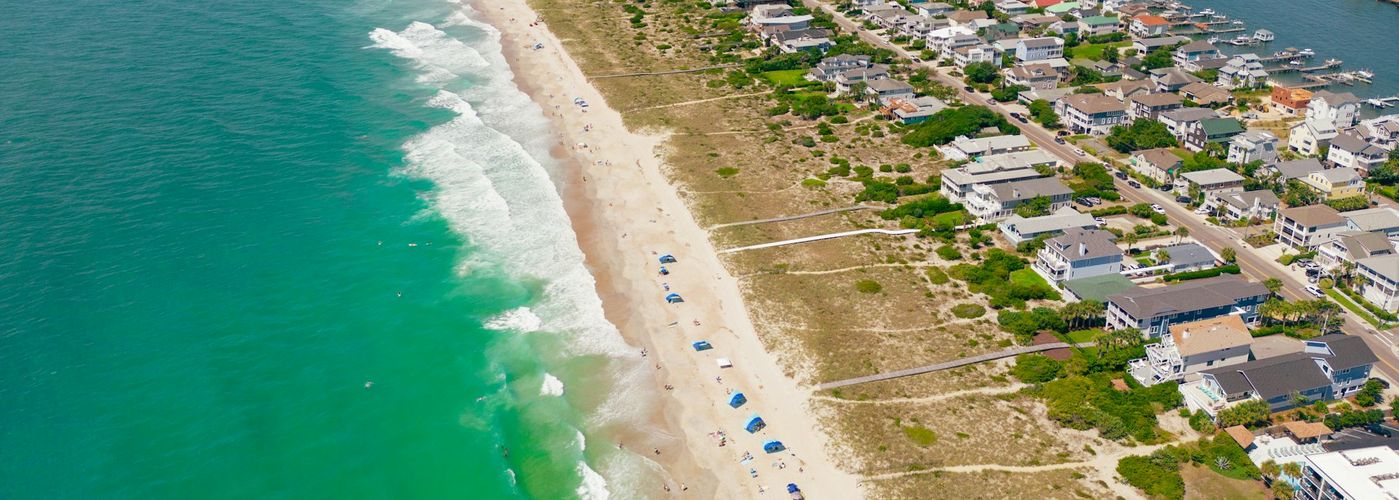
STR Investing in Outer Banks, NC
The Outer Banks, North Carolina, presents a compelling investment opportunity in the short-term rental (STR) market, driven by its robust tourism…
Avg. Nightly Rate
$483
Avg. Occupancy
58%
Avg. Property Price
$833,750
Source: AirDNA & public market data, 2025
In This Guide
About the Outer Banks, NC Market
Executive Summary
The Outer Banks, North Carolina, presents a compelling investment opportunity in the short-term rental (STR) market, driven by its robust tourism economy and unique appeal as a "drive-to" destination for major East Coast population centers. With visitor spending exceeding $2.1 billion in 2024, the region demonstrates strong and consistent demand for vacation rentals, which are the dominant accommodation type due to limited traditional hotel infrastructure. The market is characterized by a housing stock well-suited for families and groups, particularly larger beach houses, catering to a consistent demand for weekly rentals during the peak season from Memorial Day through Labor Day. While property values have appreciated significantly, the market has shown resilience, indicating a stable, high-demand vacation market with structurally limited inventory. Key investment drivers include high accessibility, strong seasonal demand, and the potential for substantial revenue optimization through professional property management. Investors must, however, carefully consider the elevated costs of coastal property insurance and the long-term climate risks associated with erosion and storm damage, especially for oceanfront properties. The regulatory environment is generally permissive, though local ordinances vary and require careful due diligence.
Market Data & Performance Metrics
The overall Outer Banks STR market, as well as specific submarkets, exhibit strong performance metrics, as detailed by AirDNA. The market benefits from high demand, particularly during peak season, which translates into attractive average daily rates (ADR) and occupancy levels.
Overall Outer Banks Market Performance
Annual Revenue
$67,942
ADR
$483
Active Listings
4857
Market Scores (out of 100)
These overall metrics indicate a healthy and active STR market with a strong market score of 83, suggesting good investment potential. The substantial number of active listings (4,857) points to a mature market with established demand.
Detailed Submarket Performance (AirDNA & AirROI)
The following table provides a more granular view of key submarkets within the Outer Banks, incorporating data from AirDNA and AirROI, which often includes year-over-year changes and specific market characteristics.
| Submarket | Properties | Annual Revenue | ADR | Occupancy | RevPAR | YoY Rev. Change | YoY Occ. Change | YoY ADR Change | Market Score | Investability | Rental Demand |
|---|---|---|---|---|---|---|---|---|---|---|---|
| Nags Head | 1,819 | $49.7K | $534 | 63% | $337.4 | 3% | 4% | 3% | 85 (Great) | 91 | 84 |
| Duck | 259 | $53,217 | $472 | 42.1% | $242 | Upward trend | — | Upward trend | — | — | Strong |
| Corolla | 2,187 | $41.6K | $615 | 60% | $369.6 | 3% | 4% | 3% | 54 (Okay) | 73 | 72 |
| Kill Devil Hills | 2,104 | $35.4K | $371.6 | 56% | $210.6 | 3% | 4% | 3% | 72 (Good) | 85 | 79 |
| Hatteras | 365 | $64K | $587.8 | 63% | $431.1 | 3% | 4% | 3% | 73 (Good) | 78 | 82 |
Analysis of these metrics reveals a dynamic market. Nags Head and Hatteras show strong performance with high market scores and investability, while Corolla, despite a good number of listings, has a lower market score. Kill Devil Hills presents a good balance. Duck, while smaller, shows upward trends in revenue and nightly rates, indicating strong traveler demand despite significant supply growth. Seasonality is a critical factor across all submarkets, with peak performance during the summer months (May to September).
Submarket Analysis
The Outer Banks is comprised of diverse submarkets, each offering unique characteristics and investment profiles. Understanding these distinctions is crucial for optimizing investment returns and managing risk.
Key Submarket Comparison (AirDNA Overview)
| Submarket | Market Score | Annual Revenue | Occupancy | ADR |
|---|---|---|---|---|
| Nags Head | 84 | $65K | 61% | $495 |
| Kill Devil Hills | 76 | $55K | 58% | $397 |
| Hatteras Islands | 75 | $76K | 63% | $626 |
| Manteo | 72 | $46K | 50% | $403 |
| Kitty Hawk | 64 | $50K | 58% | $395 |
Beyond the general overview, a deeper dive into the characteristics of each submarket, drawing from the real estate market data and STR performance insights, helps identify optimal investment locations.
Detailed Submarket Characteristics and Investment Suitability
Corolla
Corolla, located in Currituck County, is characterized by a median sales price of $833,750 in 2026, marking a 10% increase from 2025. Sales volume increased by 26% year-to-date, with properties averaging 78 days on market. The STR market here, with 2,187 properties, shows an average annual revenue of $41.6K and an ADR of $615. While its overall AirDNA market score is 'Okay' (54), its high ADR suggests a market for larger, luxury properties. Corolla's appeal lies in its family-friendly atmosphere and upscale vacation homes, often catering to larger groups. The significant increase in sales price and volume indicates strong buyer confidence and demand. Investors should target properties that can command premium weekly rates, focusing on amenities and proximity to the beach.
Duck
Duck, a pedestrian-friendly village, experienced a median sales price of $858,250 in 2026, a 15% decrease from 2025, despite a 14% increase in sales units. Days on market averaged 55 days. The STR market in Duck, though smaller with 259 listings, boasts an average annual revenue of $53,217 and an ADR of $472. Despite a 61.9% growth in supply, revenue and nightly rates trended upward, indicating robust traveler demand. Duck offers a more boutique, upscale experience, attracting visitors seeking a quieter, walkable environment. The decrease in median sales price could present a buying opportunity for investors looking for value in a high-demand area, provided they focus on properties that align with the town's upscale, family-oriented appeal.
Southern Shores
Southern Shores saw a median sales price of $718,500 in 2026, an 8% decrease from 2025, with sales units down 15%. Average days on market were 75. While specific STR performance data for Southern Shores wasn't detailed separately in the AirDNA metrics, its proximity to Duck and Kitty Hawk suggests a similar, albeit potentially more residential, appeal. Investors here might find opportunities in properties that offer a balance of privacy and access to amenities, appealing to families seeking a quieter vacation experience. Due diligence on HOA regulations is particularly important in this area.
Kitty Hawk
Kitty Hawk's median sales price was $582,500 in 2026, a 10% decrease from 2025, with sales units up 10%. Average days on market were 56. The AirDNA overview lists Kitty Hawk with a market score of 64, annual revenue of $50K, an occupancy of 58%, and an ADR of $395. Kitty Hawk offers a more accessible entry point compared to the northern beaches, appealing to a broader range of visitors. Its consistent sales volume increase despite a price decrease suggests a healthy, active market. Investors could find success with a variety of property types, from smaller cottages to mid-sized family homes, focusing on proximity to public beach accesses and local attractions.
Colington
Colington, with a median sales price of $521,500 in 2026 (a 1% decrease), saw sales units down 10%. Notably, properties here have a very low average days on market at 32 days, indicating high demand. While specific STR data is not separately provided, Colington's inland sound-side location offers a different appeal, often to those seeking water access for boating and fishing. Investment here might focus on properties with sound-front access or those offering unique recreational amenities, potentially at a lower price point than oceanfront properties.
Kill Devil Hills
Kill Devil Hills had a median sales price of $592,500 in 2026, a 1% increase, but sales units were down 10%. Average days on market were 63. The STR market, with 2,104 properties, shows an average annual revenue of $35.4K, an ADR of $371.6, and an occupancy of 56%. Its market score is 'Good' (72), with high investability (85), and rental demand (79). Kill Devil Hills is a central and vibrant area, offering a mix of attractions and amenities. The regulatory environment is considered lenient, making it attractive for STR operators. Investors can target a broad range of property types, from condos to larger homes, capitalizing on its central location and robust tourism infrastructure.
Nags Head
Nags Head's average home value was $721,190 (down 0.1% YoY), with a median sales price of $790,000 in 2026 (0% change YoY). Sales units were down 27%, and homes go pending in around 35 days, with an average DOM of 68 days. The STR market, with 1,819 properties, shows an average annual revenue of $49.7K, an ADR of $534, and an occupancy of 63%. It boasts a 'Great' market score (85), high investability (91), and rental demand (84). Nags Head is a highly desirable market, known for its iconic pier and family-friendly beaches. Its strong STR performance metrics and high demand make it a prime location for investment, particularly for properties that can cater to its established tourist base.
Hatteras
The Hatteras Islands saw a median sales price of $558,750 in 2026, an 11% decrease from 2025, with sales units down 12%. Average days on market were 72. The STR market, with 365 properties, reports an average annual revenue of $64K, an ADR of $587.8, and an occupancy of 63%. It has a 'Good' market score (73), high investability (78), and rental demand (82). Hatteras offers a more secluded, natural experience, appealing to visitors interested in fishing, watersports, and a quieter vacation. Despite the decrease in median sales price, its strong STR revenue and occupancy indicate robust demand for its unique offerings. Investors should consider properties that emphasize outdoor activities and privacy.
Manteo
Manteo's median sales price was $428,169 in 2026, a 17% decrease from 2025, with sales units down 39%. Average days on market were 44. The AirDNA overview lists Manteo with a market score of 72, annual revenue of $46K, an occupancy of 50%, and an ADR of $403. Manteo, located on Roanoke Island, offers a historic, charming town experience distinct from the oceanfront communities. Its lower price point and unique cultural appeal can attract a different segment of visitors. Investors might find opportunities in properties that offer a blend of historic charm and modern amenities, catering to those seeking a cultural or quieter getaway.
Currituck Mainland
The Currituck Mainland saw a median sales price of $398,723 in 2026 (0% change YoY), but sales units were up significantly by 77%. Average days on market were 66. While specific STR data is not provided, the substantial increase in sales units suggests growing interest in this area, potentially driven by more affordable entry points compared to the barrier islands. Investment here might focus on properties that cater to visitors looking for a more budget-friendly option or those who prioritize mainland amenities and easier access to the wider region.
Ocracoke Island
Ocracoke Island, accessible only by ferry, had a median sales price of $571,250 in 2026, a 20% increase from 2025, though sales units were down 33%. Average days on market were 107. Ocracoke offers a truly unique, secluded experience, appealing to visitors seeking an escape from the more bustling areas. Its strong price appreciation despite lower sales volume indicates high demand for its limited, unique inventory. Investors here should target properties that emphasize the island's remote charm and natural beauty, understanding the logistical considerations of ferry access.
Tourism & Economic Drivers
The Outer Banks' economy is overwhelmingly driven by tourism, making it a critical factor for STR investors. In 2024, Dare County, which encompasses much of the Outer Banks, ranked 4th in North Carolina for visitor spending, exceeding $2.1 billion. This robust tourism activity generated over $147.1 million in state and local tax revenue, significantly reducing the tax burden on residents. Tourism also supports 12,260 jobs in Dare County, accounting for nearly half (45.5%) of all employment.
Visitor Profile and Seasonal Patterns
The region's primary appeal is as a "drive-to" destination for major East Coast population centers, including Washington D.C., Charlotte, Richmond, and Philadelphia. This accessibility minimizes travel friction and broadens the potential guest pool. The peak tourism season traditionally runs from Memorial Day through Labor Day, during which the population swells from approximately 50,000 year-round residents to around 300,000 daily. This extreme seasonality means STRs experience significantly higher occupancy and ADRs during the summer months, with RevPAR peaking in July and bottoming out in January. While specific annual visitor counts were not explicitly stated, the substantial visitor spending and tax relief underscore a high volume of tourists. The area is particularly known for its large vacation home rentals, catering to families and groups.
Major Attractions and Events
The Outer Banks offers a diverse range of attractions, from historic sites to natural wonders. These include the Wright Brothers National Memorial, Cape Hatteras National Seashore, Jockey's Ridge State Park (the East Coast's tallest natural sand dune), and numerous lighthouses. The region's beaches are a primary draw for swimming, sunbathing, and watersports. Fishing, boating, and wildlife viewing are also popular activities. Major events and festivals, often funded by tourism taxes, are strategically used to boost visitation during shoulder and off-seasons, helping to extend the tourism calendar beyond the core summer months.
Economic Indicators
Dare County's economic health is closely tied to its tourism sector. The median household income in 2024 was $88,994, a 9.58% increase from the previous year. The employed population grew by 1.43% to 19,254 in 2024, with a relatively low poverty rate of 6.62%. The largest industries by employment are Retail Trade, Construction, and Accommodation & Food Services, all directly or indirectly linked to tourism. The significant tax revenue generated by tourism (6% Dare County Occupancy tax, 1% Prepared Food and Beverage tax) is reinvested into the community, funding beach nourishment projects and supporting the tourism board, which further enhances the region's appeal and infrastructure.
Why Invest in Outer Banks, NC?
Real Estate Market & Supply Trends
The Outer Banks real estate market is dynamic, influenced by its unique geography and strong tourism demand. As of April 2026, the market shows varied trends across its submarkets, with overall residential inventory down 5% year-over-year, while residential sales were up 18%. The residential median sale price saw a slight decrease of 3% year-over-year, with properties averaging 73 days on market.
Overall Market Dynamics
The Dare County property tax base increased by 67% to $27.4 billion in 2025, reflecting robust growth in recent years. Median home prices jumped from $381,500 in 2020 to $569,000 in 2023, indicating significant appreciation. The cost of building a new home is estimated at $275 to $300 per square foot for a nice home, setting a benchmark for new construction and replacement costs.
Submarket Real Estate Trends
| Submarket | Median Sales Price (2026) | YoY Change (2025-2026) | YTD Sales Units | YTD Sales Change (2025-2026) | Average Days on Market (2026) |
|---|---|---|---|---|---|
| Corolla | $833,750 | +10% | 77 | +26% | 78 |
| Duck | $858,250 | -15% | 32 | +14% | 55 |
| Southern Shores | $718,500 | -8% | 23 | -15% | 75 |
| Kitty Hawk | $582,500 | -10% | 33 | +10% | 56 |
| Colington | $521,500 | -1% | 27 | -10% | 32 |
| Kill Devil Hills | $592,500 | +1% | 73 | -10% | 63 |
| Nags Head | $790,000 | 0% | 40 | -27% | 68 |
| All Hatteras | $558,750 | -11% | 69 | -12% | 72 |
| Manteo | $428,169 | -17% | 23 | -39% | 44 |
| Currituck Mainland | $398,723 | 0% | 76 | +77% | 66 |
| Ocracoke Island | $571,250 | +20% | 8 | -33% | 107 |
This data highlights diverse performance across submarkets. Corolla and Ocracoke Island show strong price appreciation, while Duck, Southern Shores, Kitty Hawk, Colington, Hatteras, and Manteo experienced price decreases. Currituck Mainland stands out with a significant increase in sales units, suggesting growing interest and potentially more affordable options. Days on market vary, with Colington showing particularly fast sales. These trends underscore the importance of granular submarket analysis when considering property acquisitions.
Investment Strategy & Property Types
The Outer Banks STR market favors specific investment strategies and property types that align with its dominant visitor profile and seasonal demand patterns. The region's housing stock, often comprising larger beach houses, is particularly well-suited for families and groups, which form the core of its tourism base.
Optimal Property Types
Larger Homes (5+ bedrooms): These properties consistently outperform, especially in areas like Corolla, Nags Head, and Hatteras. They cater to multi-generational families and groups, who often seek weekly rentals during peak season. The ability to accommodate more guests directly translates to higher rental income and better occupancy rates.
Oceanfront or Sound-side Locations: Properties with direct beach access or sound-front views command premium rates. These locations offer unparalleled guest experiences and are highly sought after, justifying higher purchase prices and potentially higher insurance costs.
Condos and Smaller Homes (2-3 bedrooms): While larger homes dominate, smaller units can still be viable, particularly in more centrally located areas like Kill Devil Hills and Nags Head, or in charming towns like Manteo. These cater to smaller families or couples and can offer a more accessible entry point for investors. However, they may face more competition and require more aggressive pricing strategies during shoulder seasons.
Amenities Driving Premium Rates
To maximize rental income and attract discerning guests, properties should offer a range of desirable amenities:
- Private Pools and Hot Tubs: These are significant draws, especially during warmer months, and can substantially increase ADR.
- Pet-Friendly Options: A growing segment of travelers seeks to vacation with their pets. Offering pet-friendly accommodations can broaden the guest pool and justify higher rates.
- Game Rooms and Entertainment Spaces: Features like pool tables, arcade games, home theaters, and ample common areas enhance the guest experience, particularly for groups and families.
- Well-Equipped Kitchens: Guests often prefer to cook meals, especially in larger homes. High-quality appliances, ample counter space, and a full complement of cookware are essential.
- Outdoor Living Spaces: Decks, patios, outdoor dining areas, and grilling facilities extend the living space and are highly valued in a beach destination.
- High-Speed Internet and Smart Home Features: Reliable connectivity is a must, and smart home devices (e.g., smart TVs, smart thermostats) add convenience and a modern appeal.
- Proximity to Beach Access or Sound Access: Easy and convenient access to the water is paramount for most Outer Banks visitors.
Value-Add Opportunities
The primary value-add opportunity lies in optimizing STR operations. Weekly rental rates during peak season can be substantially higher than long-term lease equivalents. Professional property management, typically charging 20-30% of gross rental income, is a common strategy to maximize revenue and manage the logistical complexities of high turnover. Investors can also focus on property upgrades and renovations that enhance guest experience and justify higher nightly rates.
Risks & Mitigations
Investing in the Outer Banks STR market, while lucrative, comes with inherent risks, primarily due to its coastal geography and economic concentration. Understanding and mitigating these risks is paramount for long-term success.
Natural Disaster Risk
The Outer Banks is highly vulnerable to hurricanes, tropical cyclones, and nor'easters, which bring severe threats of storm surge, high-intensity rainfall, and coastal erosion (exceeding 14 feet per year in some areas). Sea levels have risen nearly a foot since 1950, exacerbating flooding risks from both ocean and sound sides.
Mitigation:
- Robust Insurance: Secure specialized, comprehensive insurance coverage that explicitly includes hurricane and flood damage. Be prepared for high and annually increasing premiums.
- Elevated Construction: Invest in properties built to modern hurricane-resistant standards, ideally elevated on pilings to mitigate flood risk.
- Emergency Preparedness: Have a detailed emergency plan for property protection and guest evacuation.
- Property Management: Utilize local property managers who can quickly respond to storm threats and manage post-storm recovery.
Climate Change and Long-Term Vulnerability
Rising sea levels and more frequent, powerful storms pose an existential threat to the islands' landmass and critical infrastructure like NC Highway 12.
Mitigation:
- Long-Term Planning: Consider the long-term viability of oceanfront properties. Diversify investments across different submarkets and property types, including sound-side or slightly more inland options.
- Infrastructure Investment: Monitor ongoing beach nourishment projects and other infrastructure improvements, which are vital for protecting coastal assets.
Economic Concentration Risk
The local economy is almost entirely dependent on tourism and real estate. Any significant disruption to the tourism season (e.g., major hurricane, economic downturn, pandemic) would severely impact STR revenues and the local economy.
Mitigation:
- Financial Reserves: Maintain substantial financial reserves to weather periods of low occupancy or unexpected closures.
- Diversification: While challenging in a tourism-dependent market, explore strategies to attract off-season guests (e.g., remote workers, specialized retreats) to reduce reliance on peak season.
- Market Monitoring: Closely monitor economic indicators and tourism trends to anticipate potential downturns.
Regulatory Risk
While currently operator-friendly, increasing strain on infrastructure and the need for costly beach nourishment projects could prompt future regulatory or tax changes.
Mitigation:
- Stay Informed: Actively monitor local government meetings, proposed ordinances, and community discussions regarding STRs.
- HOA/Condo Due Diligence: Thoroughly review all HOA and condo association documents for existing or potential STR restrictions and assess the financial health of associations to avoid special assessments.
- Compliance: Ensure full compliance with all existing local and state regulations to avoid fines and permit suspensions.
Supply Saturation
Rapid growth in STR listings in certain submarkets could lead to increased competition and downward pressure on rates and occupancy.
Mitigation:
- Differentiated Offerings: Invest in properties with unique amenities, prime locations, or exceptional design to stand out from the competition.
- Dynamic Pricing: Implement sophisticated dynamic pricing strategies to optimize rates based on demand, seasonality, and local events.
- Marketing and Branding: Develop strong marketing and branding for your property to attract direct bookings and build guest loyalty.
Conclusion
The Outer Banks, North Carolina, offers a compelling, albeit nuanced, investment landscape for short-term rentals. Its enduring appeal as a premier East Coast vacation destination, coupled with a robust tourism economy, provides a strong foundation for STR success. Investors who conduct thorough due diligence, understand the unique characteristics of each submarket, and strategically mitigate risks associated with natural disasters and economic concentration are well-positioned to achieve attractive returns. Focusing on larger, amenity-rich properties in desirable locations, coupled with professional management and proactive regulatory compliance, will be key to unlocking the full potential of this vibrant coastal market. While challenges exist, the structural demand for vacation rentals and the region's continuous investment in tourism infrastructure underscore its long-term viability as an STR investment hub.
STR Regulations in Outer Banks, NC
Regulatory Environment
The regulatory landscape for Short-Term Rentals (STRs) in the Outer Banks is a critical consideration for investors, characterized by a blend of state laws and varying local ordinances across Dare and Currituck counties and their respective municipalities. While generally considered operator-friendly, thorough due diligence is essential.
State-Level Regulations: North Carolina Vacation Rental Act
The North Carolina Vacation Rental Act governs rentals under 90 days, mandating written agreements and specific protocols for handling funds. This act provides a foundational framework, but local jurisdictions often impose additional requirements.
County and Municipal Regulations
Dare County (General)
Dare County generally permits STRs in most residential zones, provided properties comply with zoning ordinances regarding density, parking, occupancy limits, and noise. However, municipalities within Dare County may implement more restrictive overlay regulations.
Nags Head
Nags Head requires annual STR registration with a $25 fee. Whole-house STRs do not need additional parking beyond single-family dwelling requirements, while partial-house STRs (up to two guest rooms) require one additional parking space. Operators must acknowledge the North Carolina Vacation Rental Act and are subject to state sales tax (4.75%) and Dare County occupancy tax (6%). Non-registration within 30 days incurs a $100 civil penalty, with an additional $50 per day for continued non-compliance. This municipality demonstrates clear enforcement of its regulations.
Kill Devil Hills
STRs are explicitly allowed in Kill Devil Hills, and the regulatory environment is perceived as lenient. Hosts must obtain a vacation rental permit, adhere to occupancy limits, and register guests. Designated parking and compliance with noise regulations are also required. Despite these rules, enforcement has been noted as less strict, with many listings not displaying license numbers. This leniency can be attractive to operators, but it's crucial to still comply with all stated requirements.
Duck
Duck requires confirmation of zoning for STR use and strict adherence to Homeowners Association (HOA) rules, which can be more stringent than town regulations. An STR or transient occupancy registration, with associated fees and renewal processes, may be required. Occupancy limits are often tied to bedroom count, square footage, or septic capacity. Parking rules are enforced, often restricting on-street parking. Other critical requirements include adherence to trash and recycling schedules, noise ordinances, and the designation of a 24/7 local contact or manager. Safety requirements, such as working smoke detectors, carbon monoxide alarms, and fire extinguishers, are mandatory. Properties with pools, spas, or elevators may face additional fencing, signage, or inspection standards.
Currituck County (including Corolla and Carova)
Currituck County mandates registration for STR properties and compliance with zoning rules. A local occupancy tax of 6% is levied on gross receipts. Properties in the 4WD-access-only area north of Corolla (Carova Beach) are subject to additional oversight. Both Dare and Currituck counties actively enforce occupancy and nuisance complaints, with potential fines and permit suspension for violations.
Homeowners Associations (HOAs) and Condo Associations
HOAs and condo associations in the Outer Banks can significantly impact STR operations. Under the North Carolina Planned Community Act, HOAs can restrict or prohibit STRs if outlined in their covenants. Investors MUST review HOA documents thoroughly before purchasing. Condo associations also pose risks of special assessments for major repairs, especially for older buildings or those prone to storm damage. Low HOA dues might indicate inadequate reserve funds, leading to substantial unplanned costs. Scrutinizing reserve studies and financial health is crucial.
Taxation
In addition to local occupancy taxes (6% in Dare and Currituck counties), STRs are subject to North Carolina's state sales tax (4.75%) and any applicable local sales taxes. Hosts must register with the North Carolina Department of Revenue and file appropriate returns, unless booking platforms manage these collections on their behalf.
Enforcement
Enforcement varies, with Nags Head having clear penalties for non-registration, while Kill Devil Hills is noted for less strict enforcement. Across all areas, compliance with safety, health, and nuisance regulations is emphasized.
Financing Options for Outer Banks, NC
DSCR Loans
Qualify based on rental income, not personal income. The go-to loan for short-term rental investors who want to scale their portfolio without W-2 limitations.
- No personal income verification
- Based on property cash flow (DSCR ratio)
- Close in as few as 21 days
2nd Home Conventional
Finance vacation homes you also rent part-time. Ideal for owners who use their STR property personally and want flexible terms.
- As little as 10% down
- Personal use + rental income
- Fixed and adjustable options
Related Resources
DSCR Loans 101: The Complete Guide for STR Investors
Everything you need to know about DSCR loans for short-term rental properties. How they work, who qualifies, and why they are the go-to financing option for Airbnb and VRBO investors.
The Complete Guide to Financing Short-Term Rental Properties
A comprehensive guide to financing your short-term rental investment. Compare DSCR loans, conventional mortgages, and other options to find the right fit for your STR strategy.
Ready to Invest in Outer Banks, NC?
Get pre-approved for STR financing and start building your portfolio.